2000 LPH Industrial RO Plant in Delhi NCR: Everything Factory Owners Need to Know (2026 Guide)
02 Aug, 2026
ISO 9001:2015
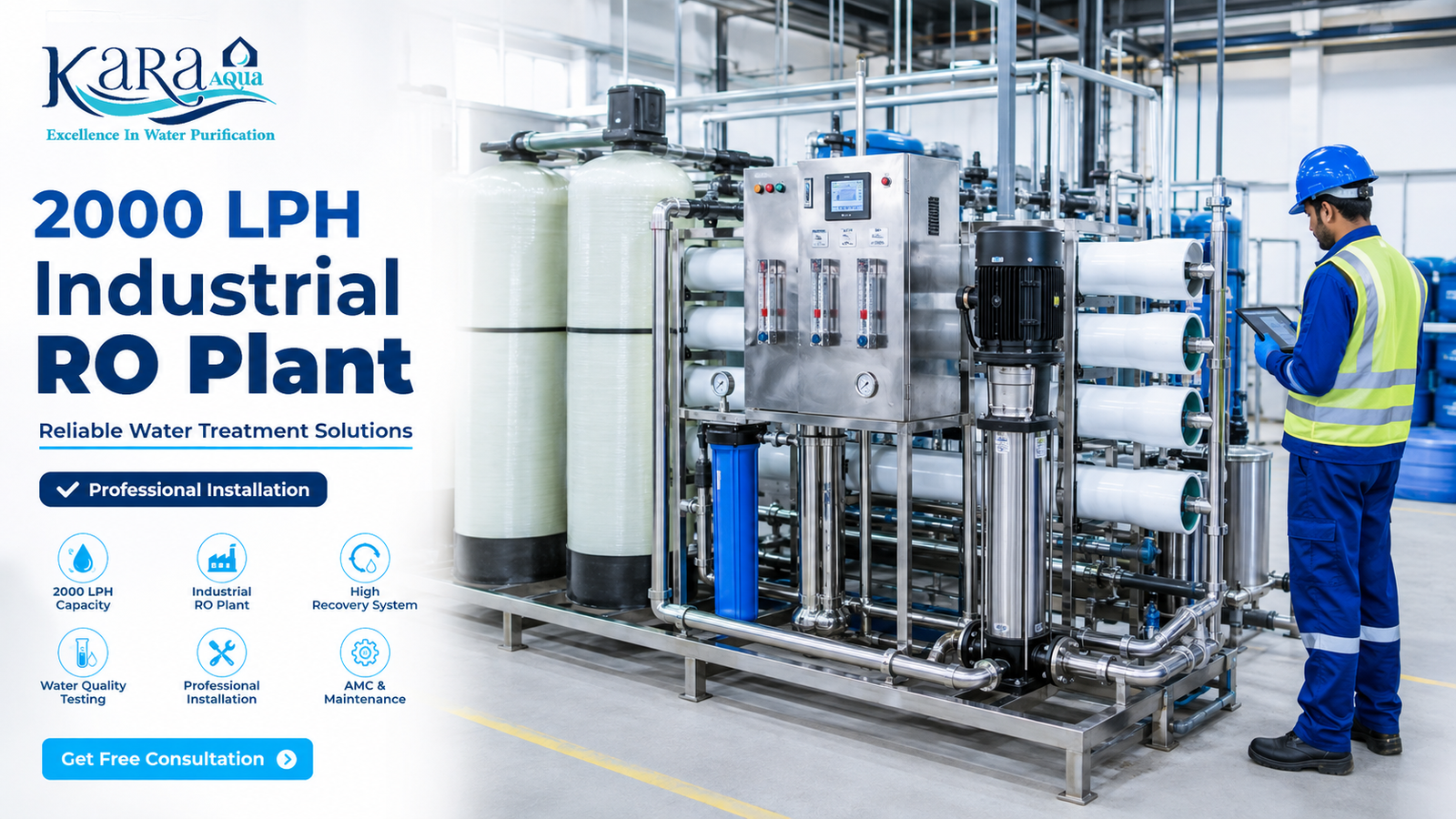
Over the last 10 years, I've installed 200+ industrial RO plants — for hospitals, pharma units, food processing factories, hotels, and manufacturing setups. And there's one thing I notice every single time: people buy a 2000 LPH Industrial RO Plant by looking only at price, and end up regretting it later.
One client I remember well — a pharma packaging unit in Faridabad. They installed a "cheap" plant with Chinese membranes for ₹4.5 lakh. Within 8 months, membrane fouling set in, recovery dropped from 75% to 45%, and their production line shut down for 3 days. When we re-engineered their plant, we found the real problem — the pre-treatment system was poorly designed from the start.
That's exactly why I'm writing this article — not just to list specifications, but to share the real mistakes, real numbers, and real lessons I've learned on the field. If you're a business in Delhi NCR — a factory, hospital, hotel, or food processing unit — looking for an Industrial RO Plant, this guide will help you make the right decision.
2000 LPH means the plant produces 2000 litres of purified water every hour. This capacity is ideal for businesses with a daily water requirement between 20,000 and 40,000 litres (assuming a 10-20 hour operating window).
I always give my clients this simple formula:
Daily Water Need ÷ Operating Hours = Required LPH Capacity
If your factory runs for 16 hours and needs roughly 30,000 litres of pure water, a 2000 LPH plant (2000 x 16 = 32,000 litres) fits perfectly — with a 10% buffer built in.
This capacity range typically suits:
In 10 years of hands-on work, I've seen the same mistakes repeated over and over. Here are real examples:
Groundwater in Delhi NCR varies wildly from area to area. We once tested a client's feed water in Bahadurgarh and found TDS at 2800 ppm — but they had ordered their plant based on a standard 2000 ppm design. The result? Membrane life dropped from an expected 3 years to just 14 months.
Lesson: Always get your raw water lab-tested before installation — check TDS, hardness, iron content, silica, and pH.
A 2000 LPH plant can run at 60% recovery or 75% recovery — the cost difference is minimal, but the operating cost difference is huge. Higher recovery means less reject water, lower electricity per litre, and longer membrane life.
I saw this with a food processing client in Noida — their first plant was running at only 55% recovery. We redesigned it as a High Recovery RO System and pushed recovery up to 72%, which cut their monthly water bill by 28%.
An Automatic 2000 LPH RO Plant costs a bit more upfront, but it drastically reduces labor cost, human error, and downtime. In a manually operated plant, one small operator mistake — like forgetting to close a valve on time — can damage an entire membrane bank.
This is the biggest lesson I've learned: your RO membrane will only ever perform as well as your pre-treatment system. If the sediment filter, activated carbon, and softener aren't designed correctly, membrane fouling is guaranteed — no matter how premium your membrane is.
When clients ask me for specifications, I don't just hand them brochure numbers — I tell them what actually determines real-world performance:
|
Parameter |
Standard Range |
Our Recommendation |
|
Membrane Type |
TFC Thin Film Composite |
High-rejection 99%+ membranes |
|
Recovery Rate |
50-65% (basic) |
70-75% (optimized design) |
|
Feed Water TDS Handling |
Up to 2000 ppm |
Custom design up to 3500 ppm |
|
Pump Type |
Centrifugal/Vertical Multistage |
Application-specific selection |
|
Housing Material |
FRP/MS |
Stainless Steel RO Plant for pharma/food grade |
|
Control System |
Manual/Semi-Auto |
Full PLC Automation preferred |
|
Pre-Treatment |
Basic sediment filter |
Multi-stage (sediment + carbon + softener) |
I specifically recommend a Stainless Steel RO Plant for pharma, food processing, and hospital applications — because SS 304/316 grade is corrosion-resistant and meets hygiene standards like WHO/GMP.
This is the question I get asked most — how much does a 2000 LPH Industrial RO Plant Price actually cost? Honestly, if anyone gives you an exact price over the phone without seeing your site, be a little skeptical.
Price depends on:
In Delhi NCR, I've installed 2000 LPH plants starting from ₹2 lakh and going up to ₹5 lakh+, depending on the factors above, your specific requirement, and site conditions. Companies that promise a "complete solution" at the lowest end of this range without checking your feed water first are usually cutting corners on pre-treatment or automation — and that almost always creates problems within 1-2 years.
Real tip: Look at total cost of ownership, not just the upfront price. A plant that costs ₹2 lakh more but delivers 15% better recovery will recover that extra cost within 3 years through electricity and chemical savings.
Hospitals
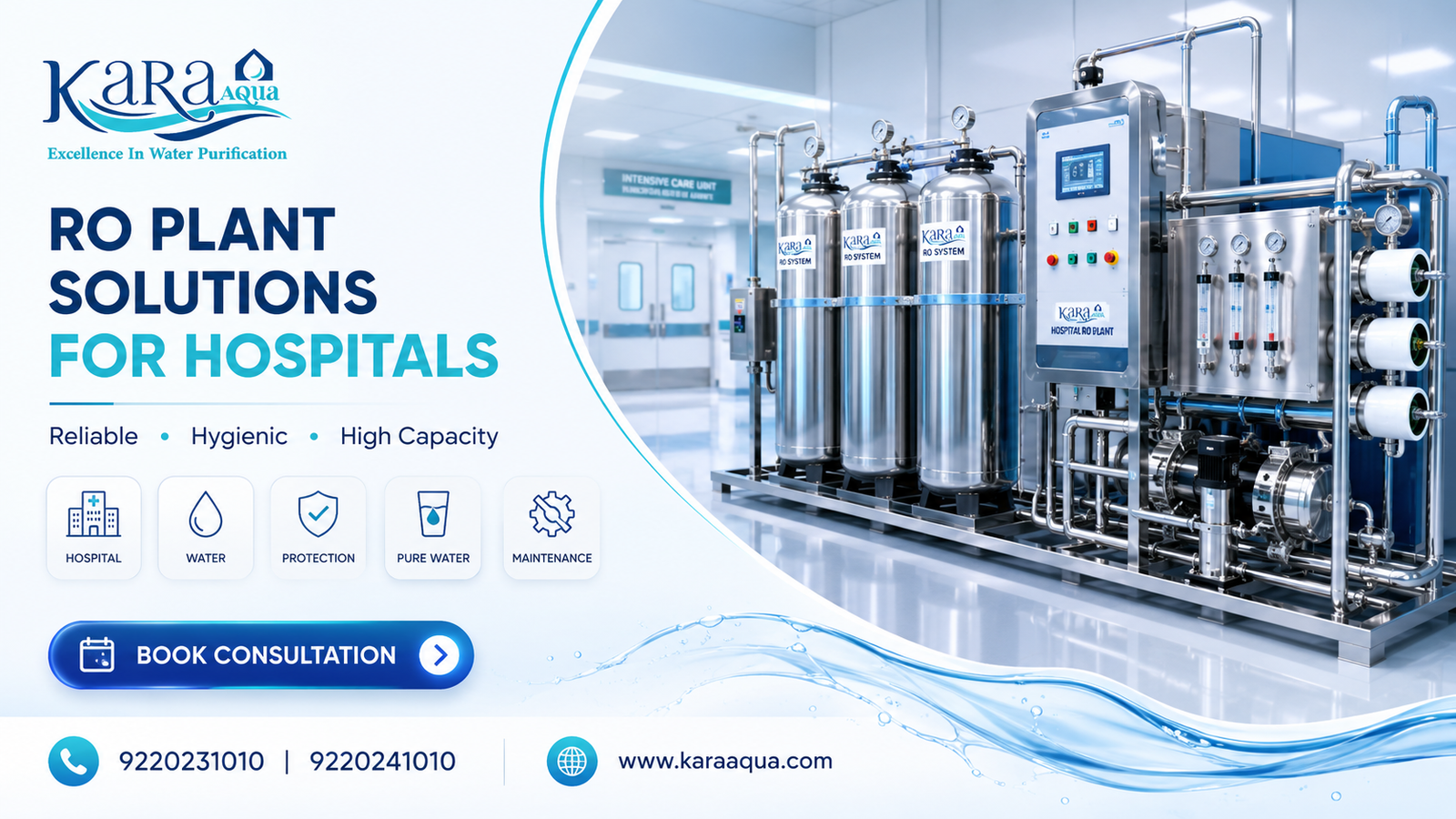
Hospitals need consistent, pathogen-free, low-TDS water — for dialysis units, lab testing, and sterilization. We've designed systems for multiple hospitals across Delhi NCR where hygiene and uptime were both critical. You can read our detailed breakdown on how we design RO plants for hospitals for more on this.
Pharmaceutical Units
Pharma companies require USP/IP grade purified water, and RO is often followed by EDI or UV systems. Automation and documentation (validation reports) are non-negotiable here.
Food Processing & Dairy Units
For food-grade applications, a Stainless Steel RO Plant is always preferred, since FSSAI compliance requires food-safe contact surfaces.
Hotels
For 3-4 star hotels, we've designed 2000 LPH plants to serve combined use cases — laundry, kitchen, and guest drinking water — where handling peak-hour demand was the biggest design challenge.
Whenever a client consults me, this is the process I follow:
Feed Water Analysis — a complete lab test (TDS, hardness, iron, pH, silica)
If you're already comparing commercial RO systems, we've written a detailed guide on how to choose the right commercial RO system, covering selection criteria and deeper technical points.
Every manufacturer will promise you "low maintenance." The reality is a bit different. Here's the actual maintenance schedule we follow across 200+ plants:
Daily: Check pressure gauges, log TDS meter readings
An honest observation from the field — clients who follow a regular AMC schedule get 4-5 years out of their membranes. Those who skip it end up replacing membranes within 12-18 months. That difference comes down to maintenance discipline, not plant quality.
We operate as an Industrial RO Plant Manufacturer in Delhi NCR, and our approach is never "one-size-fits-all." Every client's feed water, application, and budget is different — so our design process is fully customized too.
If you need a smaller capacity than 2000 LPH, we also offer a 1000 LPH RO Plant and a 500 LPH RO Plant. And if you want to browse our complete Industrial RO Plant range, our product page has detailed specifications available.
We've also completed several installations across Delhi — you can see Delhi-specific case studies in our article on Industrial RO Plant installations in Delhi, and a broader comparison of RO plant manufacturers in this article.
Conclusion: Actionable Summary
If you're planning to install a 2000 LPH Industrial RO Plant in Delhi NCR, keep these 5 points in mind:
We've learned all these lessons from real installations — including our own mistakes — and fixed them along the way. Now we put that experience to work for our clients so they don't have to repeat those same errors.
Ready to install a reliable 2000 LPH Industrial RO Plant for your business? Get in touch with Kara Aqua today for free water testing and a customized quotation.
Q1. How much does a 2000 LPH Industrial RO Plant cost in Delhi NCR?
Price depends on feed water quality, material (MS or Stainless Steel), automation level, and membrane brand. In Delhi NCR, the typical range starts from ₹2 lakh and can go up to ₹5 lakh+ based on your requirement. The most important factor is total cost of ownership — not just the upfront price, but also long-term recovery rate and maintenance cost.
Q2. What business size is a 2000 LPH RO plant suitable for?
This plant is ideal for businesses with a daily water requirement of 20,000-40,000 litres. Mid-size factories, 150-300 bed hospitals, 3-4 star hotels, pharma units, and food processing plants are typical users. To calculate your exact requirement, consider your operating hours and peak demand.
Q3. Why is an Automatic 2000 LPH RO Plant better than a manual plant?
An automatic plant reduces human error — valve timing, dosing, and pressure control are all managed automatically. This extends membrane life, reduces downtime, and lowers labor dependency. Upfront cost is slightly higher, but operational savings recover that cost within 2-3 years.
Q4. What is the membrane life of an Industrial RO Plant?
With proper pre-treatment and regular maintenance, membrane life is typically 3-5 years. If feed water TDS is high or pre-treatment is weak, membrane life can drop to as little as 12-18 months. Clients who follow regular AMC schedules consistently get longer membrane life.
Q5. Is the design of a 2000 LPH RO plant different for high TDS water?
Yes, for high TDS water (2000+ ppm), the pre-treatment system needs to be designed stronger — extra softening, higher pressure pumps, and sometimes even a dual-pass RO configuration. Using a standard design increases the risk of membrane fouling and early failure.
Written by Bahadur Chand, Director of Kara Aqua, with 10+ years of experience in Industrial RO Plant design, installation, and water treatment solutions across Delhi NCR.
There are many variations of passages of Lorem Ipsum available, but the majority have suffered alteration in some form by injected randomised words which don't look even slightly believable.
There are many variations of passages of Lorem Ipsum available, but the majority have suffered alteration in some form.
No FAQs available at the moment.
